Cabinets and countertops take up more visual space in a kitchen than almost any other features, so the way they work together can shape the entire room. Even beautiful selections can feel disconnected if the colors, patterns, finishes, and proportions compete rather than complement one another.
For homeowners planning kitchen cabinets and countertops in Melrose, the best approach is to consider both surfaces as part of the same design conversation. Instead of selecting cabinetry first and treating the countertop as an afterthought, thinking about the two together can lead to a more balanced kitchen and fewer difficult decisions later.
Carole Kitchen and Bath Design helps homeowners coordinate cabinetry, countertops, finishes, and layout so the finished room feels intentional from one surface to the next.
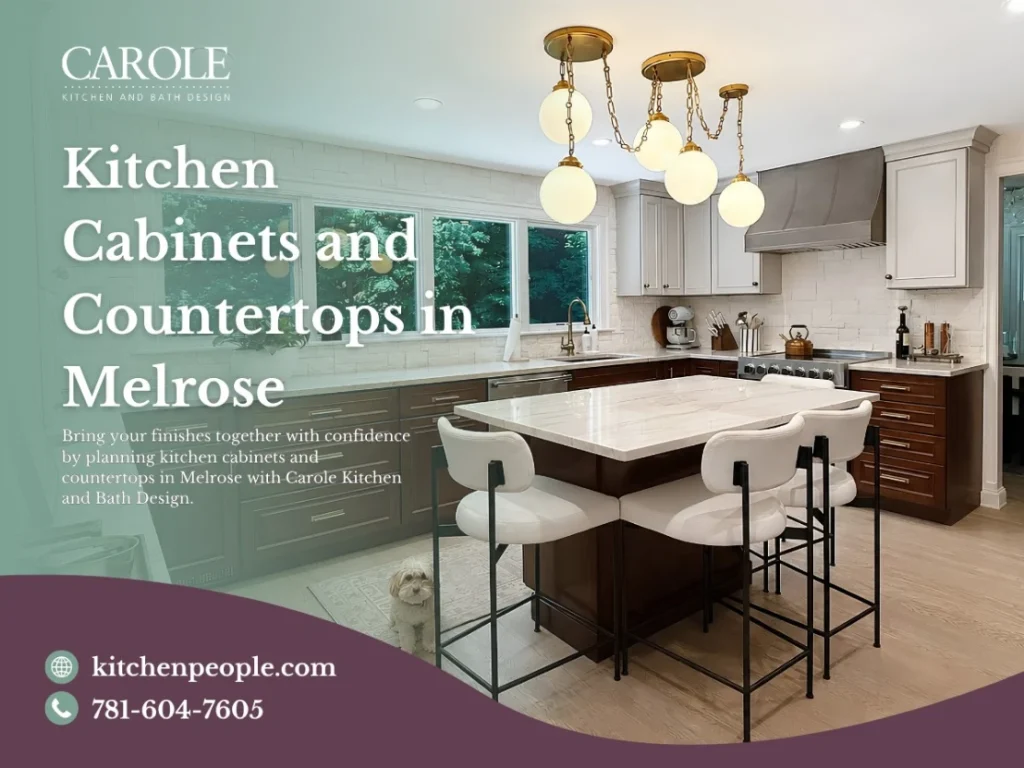
Create a Cohesive Look With Carole Kitchen and Bath Design
A coordinated kitchen does not mean every finish needs to match.
In fact, some of the most interesting kitchens combine contrasting colors and textures. A darker island can sit comfortably beside lighter perimeter cabinetry. A subtle countertop may balance cabinetry with visible wood grain, while a more expressive surface can add movement to simple painted doors.
The key is identifying which element should carry the most visual attention.
During countertop selection, look at the undertones within both surfaces. Two whites, for example, may appear compatible until one has a warm cream undertone and the other leans cool or gray. Seeing cabinet and countertop samples together is much more useful than evaluating either one independently.
Find the Perfect Pairing for Your Kitchen
Cabinet color is often the easiest starting point because cabinetry covers so much of the room.
White or off-white cabinetry provides flexibility, but the countertop can dramatically change the mood. Soft veining may create a quieter look, while stronger contrast can make the kitchen feel more graphic and defined.
Wood cabinetry introduces another consideration. Natural wood already contains variations in color and grain, so homeowners should consider whether they want the countertop to quietly support those features or introduce additional movement.
With darker cabinetry, lighter counters can create contrast and help keep the room feeling open. A darker surface can also work, but lighting, room size, and the overall palette become especially important.
Design a Kitchen That Works Beautifully
A countertop should not only look right beside the cabinets. It needs to work for the household.
Someone who cooks every day may prioritize durability, cleaning, and resistance to everyday wear. Another homeowner may place greater emphasis on a particular natural pattern or visual character.
Good kitchen design Boston projects balance appearance with those practical needs. Before falling in love with a sample, think about how the surface will be used. Consider meal preparation, spills, entertaining, cleaning habits, and how much maintenance feels realistic for your household.
There is no universally perfect countertop. The better choice is the one that suits both the cabinetry and the way the kitchen is used.
Bring Cabinets and Surfaces Together
Cabinet door style can also influence which countertop feels appropriate.
Detailed traditional cabinetry already provides visual texture through raised panels, moldings, or decorative features. Pairing it with an extremely active countertop can sometimes make the room feel busy.
Simple slab or Shaker-style doors can provide more freedom to introduce movement in the countertop because the cabinetry itself is visually quieter.
This becomes particularly useful when working with custom cabinets, where door style, finish, proportions, and configuration can all be considered alongside the surface selection. The goal is not to follow a rigid design rule but to establish a clear visual hierarchy.
Make Every Finish Work Together
Countertops are rarely viewed in isolation. They sit beside cabinet finishes, hardware, sinks, faucets, appliances, flooring, and wall colors.
That means a countertop that looks perfect against a cabinet sample may still feel wrong when the rest of the palette enters the picture.
Pay attention to finish as well as color. Polished surfaces reflect more light and may feel crisp or formal, while matte or honed finishes can create a softer effect. Cabinet sheen matters too. A room filled entirely with glossy surfaces can feel very different from one that combines understated finishes and natural textures.
Reviewing the materials together helps reveal these relationships before final decisions are made.
Choose With Confidence by Understanding Your Options
Different countertop materials bring different characteristics to a kitchen.
Quartz is popular because it offers consistency, a broad range of looks, and relatively straightforward maintenance. Granite provides natural variation, which means each slab can have its own distinctive pattern. Other natural stones offer their own appearance and performance considerations.
Rather than choosing by popularity alone, homeowners should compare how each option fits their priorities. Pattern consistency, maintenance expectations, durability, edge options, thickness, and overall appearance can all influence the decision.
A beautiful material that does not fit the household’s lifestyle may become frustrating over time. Practical considerations belong in the design process from the beginning.
Create a Balanced Kitchen With Carole Kitchen and Bath Design
Balance also comes from knowing when to simplify.
If the cabinetry has a dramatic finish, a restrained countertop can give it room to stand out. If the cabinets are quiet and neutral, the countertop may become the feature that brings personality into the room.
The size of the surface matters too. A bold pattern may appear subtle on a small sample but feel far more prominent across a long perimeter counter and large island.
This is one reason small samples should be treated as a starting point rather than the complete picture. When possible, consider how the pattern repeats or moves across a larger area.
Ready to Refresh Your Kitchen? Think Beyond Individual Samples
Lighting can change how both cabinetry and counters appear throughout the day.
Natural daylight may reveal undertones that are difficult to see in a showroom. Evening lighting can warm a finish considerably. Cabinet lighting can also affect how the countertop appears along work surfaces.
Carole Kitchen and Bath Design can incorporate cabinet lighting into the cabinetry plan, helping homeowners think about function and appearance together.
When evaluating countertop materials, consider them under lighting conditions that resemble the finished kitchen whenever possible. A surface that looks cool and gray under one light source may appear noticeably warmer under another.
Consider the Entire Kitchen, Not Just the Countertop
The most successful pairings usually emerge when homeowners stop asking, “Which countertop do I like best?” and instead ask, “Which countertop works best with this kitchen?”
That question creates room to consider architecture, cabinetry, lighting, storage, flooring, appliances, and the overall mood of the home.
It is especially useful when selecting custom cabinets, since cabinetry choices can influence proportions, countertop runs, island dimensions, and the amount of visible surface throughout the room.
A coordinated approach can also prevent a common problem: making several individually attractive choices that do not feel connected once installed.
Frequently Asked Questions About Kitchen Cabinets and Countertops in Melrose
Should I choose my cabinets or countertops first?
Cabinetry is often selected first because it establishes much of the kitchen’s color, style, and layout, but countertop decisions should follow closely. Evaluating samples together helps reveal undertones, contrast, pattern, and finish relationships before either choice becomes difficult to change.
Do my countertops need to match my cabinets?
No. Matching too closely can actually make a kitchen feel flat. Complementary colors, contrasting tones, and different textures often create more depth. The important part is making sure the undertones and overall visual weight of the materials feel intentional when viewed together.
How do I choose between a subtle and bold countertop pattern?
Look at how much visual movement already exists elsewhere in the room. Detailed cabinetry, strong wood grain, patterned flooring, or decorative finishes may pair better with a quieter surface. Simpler cabinetry can often support stronger veining or more noticeable countertop movement without overwhelming the design.
How can I make sure my selections look right in my home?
Review samples together and pay attention to how they respond to natural and artificial light. Also consider flooring, hardware, appliances, paint colors, and other nearby finishes. A coordinated countertop selection process looks beyond a single sample and considers how every visible surface contributes to the room.
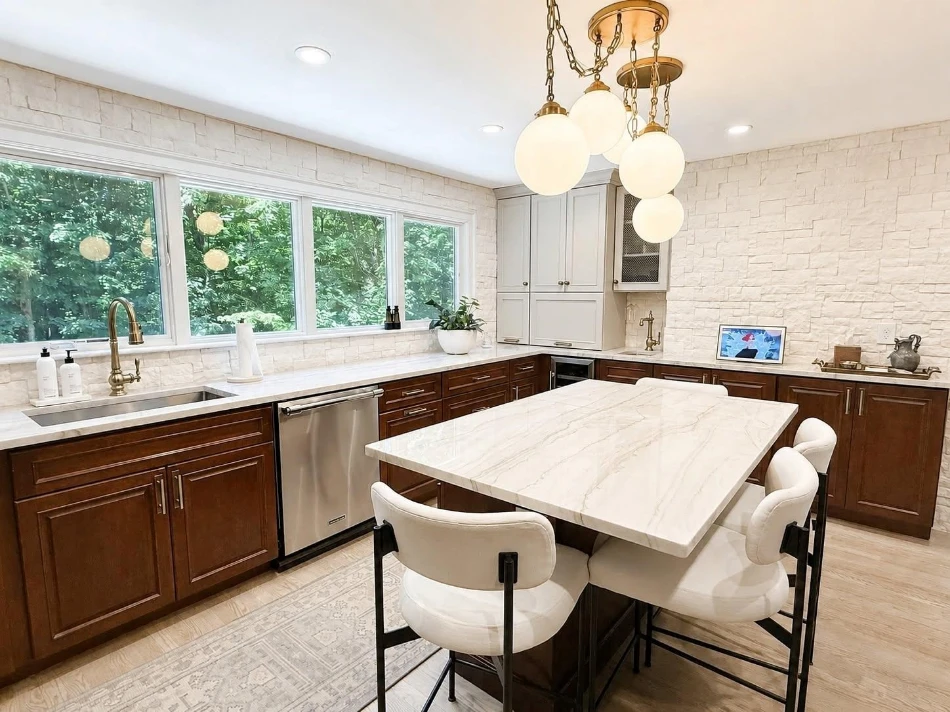
Find the Perfect Pairing for Kitchen Cabinets and Countertops in Melrose With Carole Kitchen and Bath Design
Choosing cabinetry and countertops should feel like building one complete kitchen, not making two unrelated purchases. Carole Kitchen and Bath Design can help homeowners develop a coordinated plan that considers cabinet style, finish, storage, surface choices, lighting, and how the room will function every day.
If you are planning kitchen cabinets and countertops in Melrose, start with a design conversation. With thoughtful guidance and a clear view of the entire space, Carole Kitchen and Bath Design can help you create a kitchen where colors, materials, proportions, and everyday function come together naturally.