Cabinetry has a major influence on how a kitchen looks, feels, and functions. Beyond the finish or door style, the way cabinet doors and drawers sit on the cabinet frame can change everything from the visual character of the room to the amount of usable storage inside. For homeowners planning a kitchen renovation in Greater Boston, this choice becomes especially important when working with older architecture, compact layouts, or a home with distinctive period details.
The conversation around inset vs full overlay cabinets is not simply about deciding which style looks better. Each construction method creates a different relationship between cabinetry and the surrounding space. Understanding those differences can help you select cabinetry that feels intentional in your home rather than choosing based on appearance alone.
What Are Inset Cabinets?
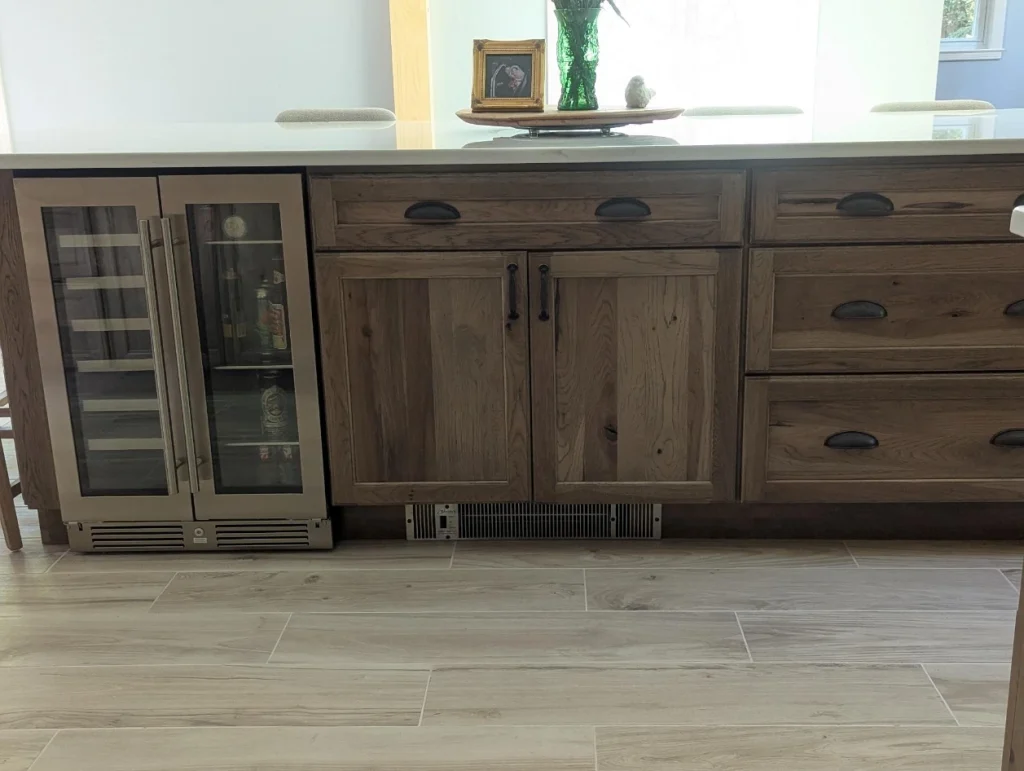
Inset cabinetry gets its name from the way the doors and drawer fronts are positioned. Instead of resting on top of the cabinet frame, they are fitted inside the frame, so the front of the cabinetry appears nearly flush.
This construction creates clean, defined lines around every door and drawer. The visible frame becomes part of the overall design, giving the cabinetry a furniture-like quality that can feel particularly appropriate in traditional and transitional kitchens.
Precision matters with inset construction. Because each door must fit neatly within its opening, the spacing around the doors and drawers needs to be carefully considered. This attention to proportion is one reason inset cabinetry is often associated with custom kitchen design.
Inset cabinets can work beautifully in Greater Boston homes where architectural character is part of the appeal. In a historic property or a home with detailed millwork, the visible cabinet frames can complement existing trim and craftsmanship without making the kitchen feel overly ornate.
What Are Full Overlay Cabinets?
Full overlay cabinetry takes a different approach. The doors and drawer fronts are installed over the cabinet frame and cover most of it when closed. This minimizes visible framing and creates a more continuous appearance across the cabinetry.
Because there are fewer visual breaks between doors and drawers, full overlay designs often feel streamlined. They are frequently used in transitional and contemporary kitchens, although the final look depends heavily on the door profile, hardware, finish, and surrounding materials.
For homeowners throughout Boston and surrounding areas, full overlay cabinets can offer strong versatility across different kitchen styles. They can pair with a simple slab-style door for a modern look or with a more detailed profile for a kitchen that balances traditional architecture with a cleaner update.
The construction can also make efficient use of cabinet space because the doors sit over the frame rather than inside it. In kitchens where every inch matters, that practical distinction deserves consideration.
How Cabinet Construction Changes the Look of a Kitchen
The visual difference between these cabinet styles can seem subtle when viewing a single sample door. Across an entire kitchen, however, the effect becomes much more noticeable.
Inset cabinetry introduces deliberate lines around individual doors and drawers. Those lines create rhythm and definition, which can add depth to a kitchen with a restrained color palette. The cabinetry often feels crafted as a collection of individual furniture pieces rather than one continuous wall of storage.
Full overlay cabinetry reduces those lines. With most of the frame concealed, attention shifts toward the door style, hardware, countertops, backsplash, and overall geometry of the kitchen.
Neither approach automatically makes a kitchen traditional or contemporary. An inset cabinet with a simple door and understated hardware can feel remarkably current, while full overlay cabinetry with a detailed door profile can suit a classic interior. Cabinet construction establishes the foundation, but the surrounding design choices determine the final character.
Which Style Works Better in Older Greater Boston Homes?
Greater Boston includes homes built across many architectural periods, and renovations often need to respect features that homeowners want to preserve. Original moldings, hardwood floors, unusual room proportions, and detailed trims can all influence cabinetry decisions.
Inset cabinetry can feel natural in homes where craftsmanship and architectural detail are prominent. Its framed appearance can echo the proportions found in traditional millwork and built ins. Rather than competing with an older home character, well-designed inset cabinetry can appear connected to it.
That does not mean full overlay cabinetry is unsuitable for an older property. In fact, it can provide an effective contrast when homeowners want the kitchen to feel noticeably refreshed. A cleaner cabinet front can help simplify a visually busy room while allowing original architectural details elsewhere to remain prominent.
The goal should be compatibility rather than automatically matching the age of the house. A successful kitchen can acknowledge its architectural setting while still reflecting how the homeowner wants to live today.

Consider Storage and Everyday Function
Appearance is only one part of the decision. Cabinet doors and drawers are used constantly, so construction should also support the household routines.
Inset doors occupy part of the framed cabinet opening, which can slightly reduce accessible interior space compared with some overlay configurations. That difference may feel minor in a large kitchen, but it can become more meaningful when several cabinets are working within a compact footprint.
Full overlay construction can offer a little more flexibility when maximizing accessible cabinet space is a priority. This may be valuable in Greater Boston kitchens where existing walls, windows, doorways, radiators, or circulation paths limit opportunities to expand the cabinetry.
Rather than considering storage only in terms of cabinet count, think about what needs to go inside. Drawers for cookware, pantry storage, small appliance locations, recycling systems, and specialized organizers can have a greater effect on everyday convenience than the number of cabinets alone.
Think About Maintenance and Long-Term Performance
Cabinetry needs to handle years of opening, closing, cleaning, cooking, and seasonal changes inside the home.
Inset doors rely on carefully controlled gaps around the door and drawer fronts. Because wood naturally responds to changes in indoor moisture levels, material selection, cabinet quality, and proper planning all contribute to long-term performance. Greater Boston’s changing seasons make thoughtful cabinet planning particularly worthwhile.
Full overlay cabinetry offers a different configuration because the doors and drawer fronts sit over the cabinet frame. This provides more visual coverage around the openings, but quality materials and construction remain important considerations when selecting cabinetry for long-term use.
With either option, long-term performance depends on more than the cabinet style itself. Hinges, drawer hardware, finishes, ventilation, indoor humidity, and routine care can all influence how well cabinetry looks and functions over time.
How Should You Choose Between the Two?
Choosing between inset vs full overlay cabinets starts with looking at the kitchen as a whole. The age and architecture of the home, available space, storage priorities, desired aesthetic, and budget can all help determine which cabinet style makes more sense.
Inset cabinetry may be a strong choice when the goal is to complement a traditional, historic, or furniture-inspired interior. Its visible face frame and defined door and drawer openings can add architectural detail that feels especially appropriate in Greater Boston homes where preserving period character is an important part of the renovation.
Full overlay cabinetry may be better suited to homeowners who want a cleaner, more streamlined appearance or want to make efficient use of available cabinet space. Because the doors and drawer fronts cover most of the cabinet frame, full overlay can work with a wide range of kitchen styles, from transitional spaces to more contemporary designs.
The room itself should also guide the decision. Older Greater Boston kitchens may have uneven walls, varying ceiling heights, original trim, tight clearances, or compact layouts that need to be considered when cabinetry is planned. Accurate measurements and thoughtful cabinet specifications can help determine how either style will relate to those existing conditions.
There is no single option that is better for every kitchen. The better choice is the one that supports the home’s architecture, the homeowner’s storage and functional needs, and the overall direction of the kitchen design.
FAQs About Inset and Full Overlay Cabinetry
Are inset cabinets better than full overlay cabinets?
Neither style is universally better because they solve different design priorities. Inset cabinetry offers a precise, furniture-like appearance with visible framing, while full overlay cabinetry creates a cleaner and more continuous cabinet front. The right choice depends on your home’s architecture, storage requirements, available space, preferred aesthetic, and renovation budget.
Are inset cabinets a good choice for older Greater Boston homes?
They can be an excellent option, particularly when a home has traditional millwork, detailed trim, or architectural features worth preserving. The framed construction of inset cabinetry can complement those details naturally. However, the kitchen should still be evaluated individually because an older home does not automatically require traditional cabinetry.
Do full overlay cabinets provide more storage space?
Full overlay construction can provide slightly greater accessibility to cabinet interiors because the doors and drawer fronts sit over the frame rather than within the opening. The practical difference varies by cabinet design. A well-planned layout with useful drawers, organizers, and appropriately sized cabinets will usually have a greater impact on storage efficiency.
Which cabinet style is easier to incorporate into a modern kitchen?
Full overlay cabinetry is commonly associated with contemporary kitchens because it minimizes visible framing and produces clean lines. Inset cabinetry can also look modern when paired with simple door profiles, restrained hardware, and contemporary finishes. The overall design matters more than relying on cabinet construction alone to establish a particular style.
Find the Right Fit With Inset vs Full Overlay Cabinets – Call Carole Kitchen and Bath Design Today!
Cabinetry should feel like it belongs in your kitchen, not like a design choice made independently of the home around it. The right construction, proportions, storage features, finishes, and hardware can bring together the practical and architectural sides of a renovation.
Carole Kitchen and Bath Design helps Greater Boston homeowners make those decisions with the entire room in mind. From understanding how cabinetry will work within an existing layout to selecting details that complement the home’s character, thoughtful planning can make a significant difference in the finished space.
Call Carole Kitchen and Bath Design today to start planning cabinetry that fits your home, your kitchen, and the way you use it every day.